A Microbial Consortium for Life on Mars
Humanity has never given up on the dream of Martian gardens, and step by step, we are edging closer to that goal. One of those steps was a joint experiment by the D.I. Ivanovsky Academy of Biology and Medicine of the Southern Federal University (SFedU) and the Institute of Biomedical Problems of the Russian Academy of Sciences. Researchers assembled a consortium of ten microbial strains and sent them into near-Earth orbit aboard the Bion-M No. 2 spacecraft. Their aim: to see how a complex community of bacteria and fungi withstands the extreme conditions of spaceflight — heightened radiation, weightlessness, and heavy g-forces. At the orbit of 370–380 km where Bion-M No. 2 flew, radiation levels are over 200 times higher than Earth’s natural background and 30% higher than aboard the International Space Station.
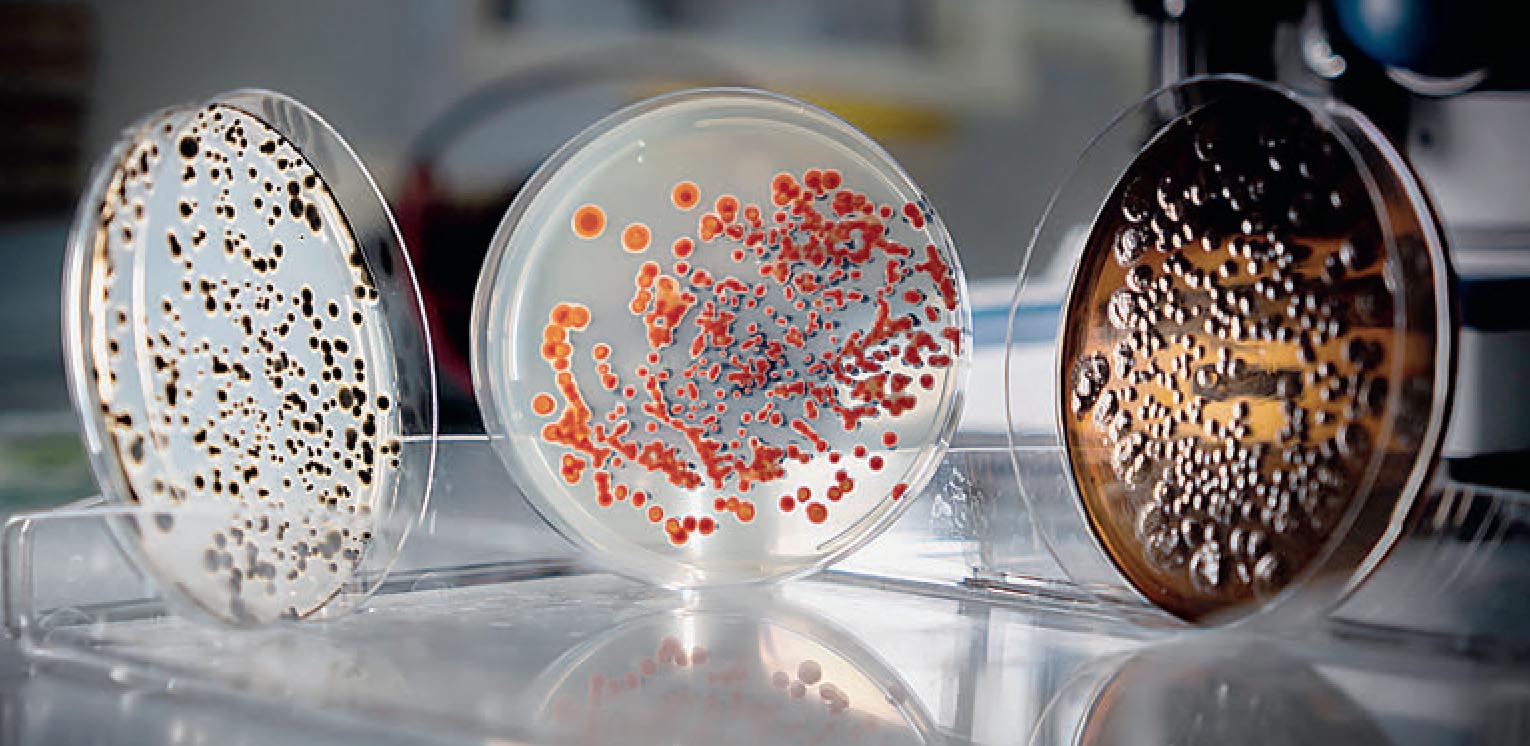
Strains of microorganisms that are part of the consortium and survived the orbital flight.
A microbial consortium is a specially chosen, co-cultured community of microorganisms (bacteria, yeasts) that enter into intricate symbiotic relationships, helping one another grow and survive. The sample sent into space included new strains of soil bacteria and fungi, isolated from natural soils of the Rostov region as well as from soils affected by industrial pollution. Every member of this microscopic collective plays a part: cyanobacteria handle photosynthesis, while actinomycetes and bacilli build up biomass. Some of the microorganisms produce compounds that can boost soil fertility; others provide resilience against oxidative stress.
The biological samples spent nearly two months in near-Earth orbit — launched on 20 August and returned to Earth on 18 October 2025. Post-landing analysis confirmed that all the microorganisms within the consortium successfully survived the flight, though a few showed slightly slower growth, and the red yeast Rhodotorula mutated, developing a higher number of white, unpigmented cells. Scientists now need to study in detail how spaceflight affected the mutation rate in the microorganisms’ DNA.
The consortium was designed with a special purpose: restoring the properties of human-contaminated land or the fertile soil layer after wildfires, and colonizing lifeless substrates like desert soils, the Far North, and even the ground of other planets. The space experiment demonstrated that the consortium is quite resilient under extreme conditions. But can a microbial community like this really turn dead Martian dirt into life-giving soil?
At SFedU, in parallel with the orbital experiment, researchers were also working in the lab. A microbial community identical to the one that journeyed into orbit was cultivated in a prototype of Martian regolith — soil from the Mojave Desert (in the southwestern United States). This soil closely mimics the properties of the red sands blanketing the surface of Mars. And in November 2025, the first shoots of barley sprouted from this “Martian” soil, after it had been treated with the same type of microbial consortium.

The first barley sprouts emerging from a prototype of Martian soil treated with a microbial consortium analogous to the one sent into near-Earth orbit.
The results of this study will not only reveal the limits of earthly microorganisms’ survivability but will also bring humanity closer to creating stable, closed-loop ecosystems for life beyond Earth.
Source: Candidate of Biological Sciences Victoria Teleganova, Science and Life, 2026-1. Based on information from the press service of the Southern Federal University. Photos provided by the SFedU press service.
Category:
plants space 
Animal communication is studied not only to learn more about the animals themselves, but also to understand how human language originated. This refers, of course, to vocal communication: how it occurs, what neural mechanisms are involved in it, and what exactly is contained in the vocal messages animals exchange. In this regard, chimpanzees receive special attention — after all, from an evolutionary perspective, they are our closest relatives. The vocal signal repertoire of chimpanzees is quite broad, and within it, one can distinguish between simple and complex signals. But what does "complex signals" mean? Various animals, not just chimpanzees, combine sounds together, but it is usually thought that the resulting complexity is purely superficial, that the sounds are combined randomly. It has been shown for birds and primates that new meaning emerges in their sound combinations. However, this new meaning is also formed by simple addition, similar to how in the phrase "black cat" the new meaning arises from the simple combination of "black" and "cat."
... Read more Български
 Deutsch
 ქართული
 English
 Polski
 Română
 Русский
 Türkçe
 Suomi
Suomi Svenska
 Українська

 (0)
(0) Soy. History, Benefits, and Biochemistry